Home/Floor Shield
Floor coating system
Floor Shield polyaspartic floor coating
High solids, zero VOC polyaspartic coatings for interior and exterior concrete. Fast cure and a quick return to service, with low odor. Installed as solid color or as a decorative flake or quartz broadcast system.
09 67 23Resinous Flooring
System build
From the slab up
Topcoat Clear Coat HS, or a second color coat with slip aggregate
Broadcast Decorative flake or quartz, where selected
Base coat Floor Shield-W Color HS, factory pigmented
Primer Moisture Vapor Barrier, where slab testing calls for it
Substrate Concrete, diamond ground to a CSP 2 profile or as specified
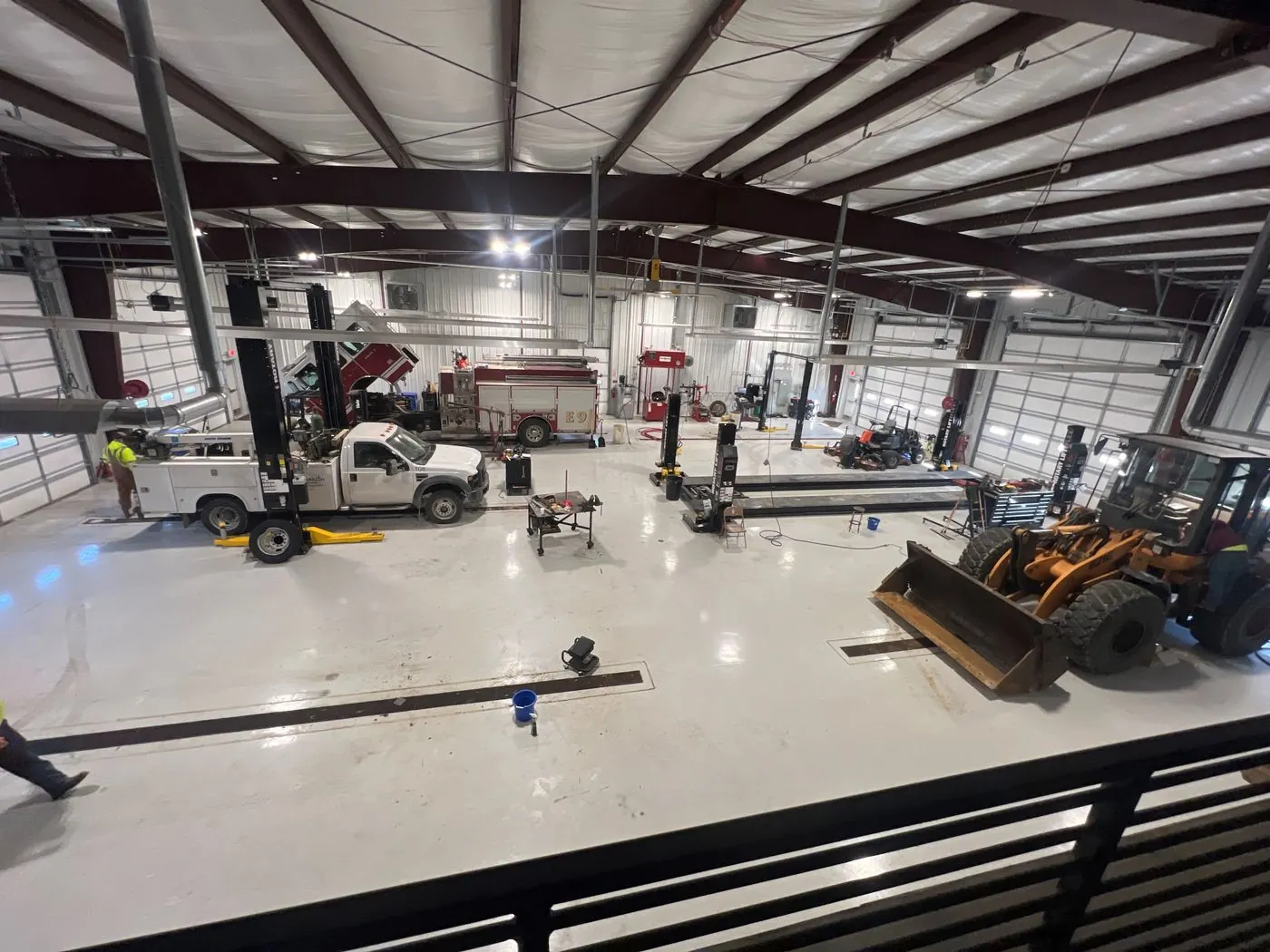
- Automotive sales and service areas
- Restaurant kitchens and dining areas
- Retail stores, malls, atriums and restrooms
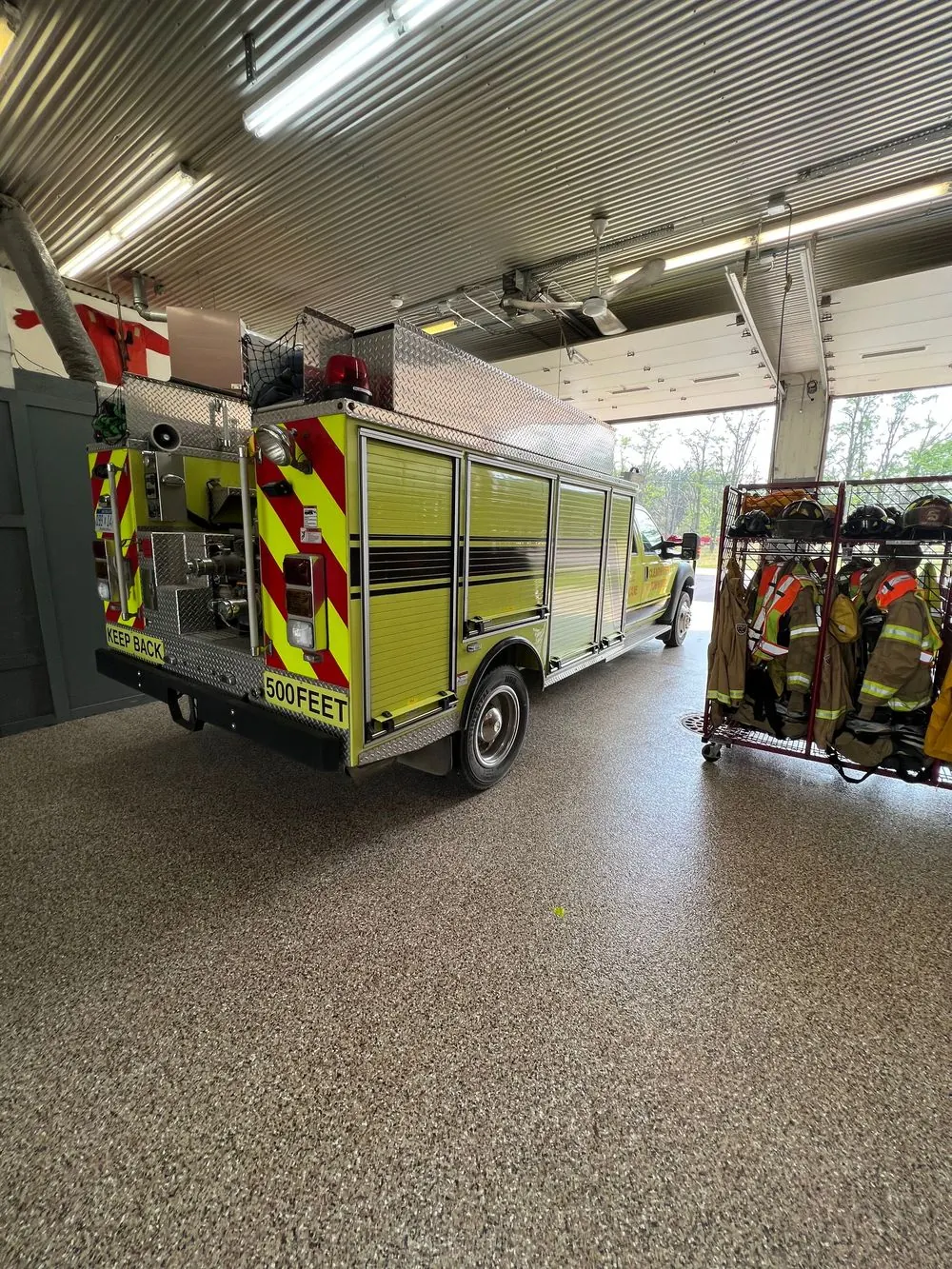
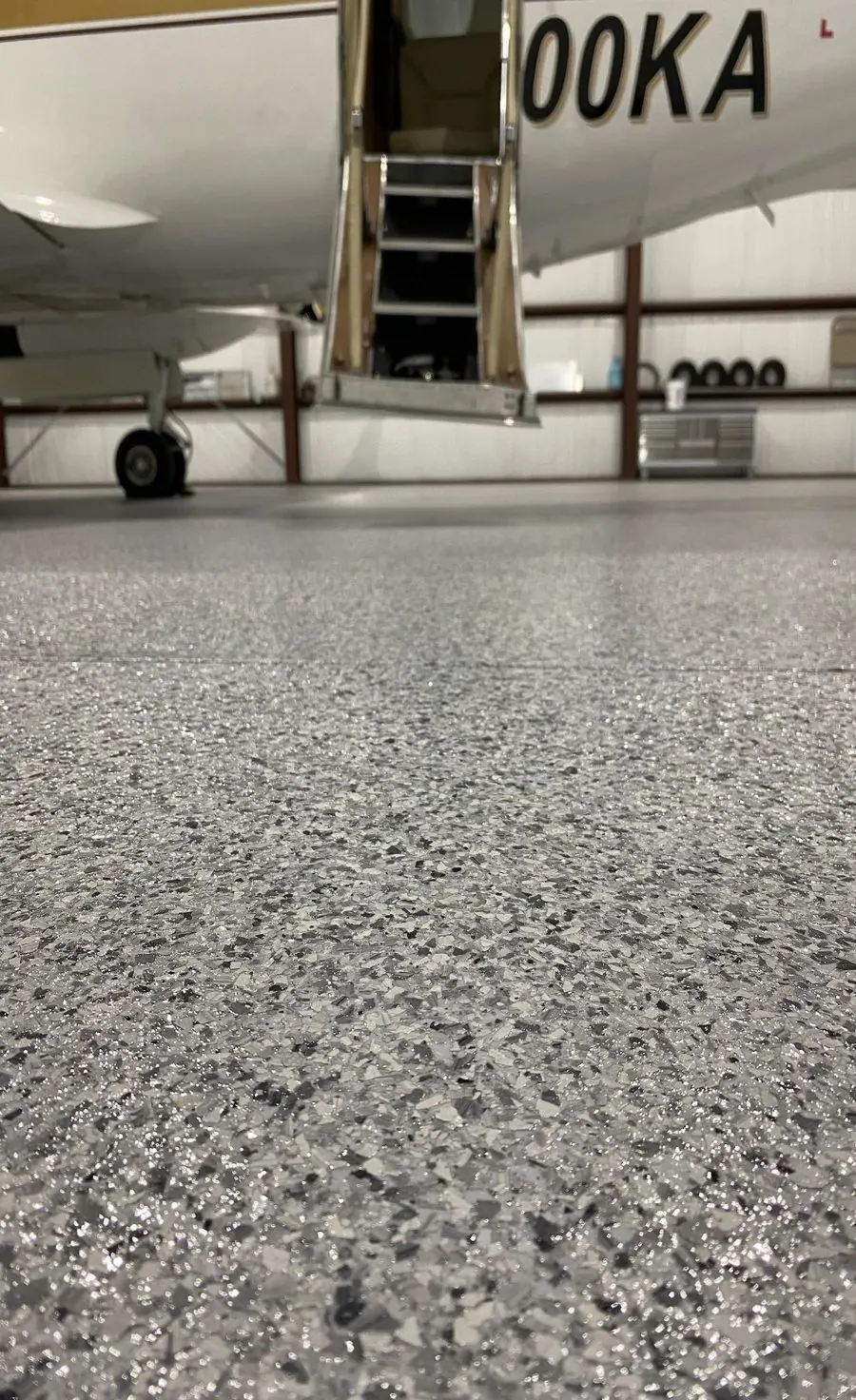
- Fire stations, aircraft hangars and warehousing
- Medical and dental facilities; animal housing
- Covered walkways and breezeways at multifamily and condominium buildings
- Properly prepared concrete; ground, acid stained or dye stained concrete
- Polymer modified cementitious overlays
- Prepared epoxy floors and epoxy base coats
- Intact VCT or ground ceramic tile
- Not over acrylic sealers, paints or stains
Slip resistance
Traction, tuned to the space
Slip resistant aggregate goes into the coating at a rate set for each area, and the finish is measured to ANSI A326.3, the American National Standard test for the slip resistance of hard surface flooring.
- What it measures
Wet dynamic coefficient of friction, or DCOF: the grip the floor gives a test foot that is already sliding across a wet surface.
- How it is measured
A BOT-3000E tribometer drags a standard rubber test foot across the floor, wetted with a standard test solution, in repeated passes. The readings are averaged.
- What the number means
A wet DCOF of 0.42 or higher is the benchmark for level interior floors expected to be walked on when wet. Showers, pool decks, exterior walkways and ramps call for more, and the standard leaves those values to the manufacturer.
Standard slip finish2 oz. 40 size and 2 oz. 20 size silica per gallon, the data sheet rate
Heavy slip finish16 oz. 40 size silica per gallon in the color coat
0.42 benchmark for level interior floors walked on when wet
DCOF compares surfaces under controlled conditions. Slope, water, oils, footwear and cleaning all affect traction in service, so the finish is selected for each space and a sample can be tested before the floor goes down.
Why polyaspartic
Fast, low odor, and clear in the sun
Polyaspartic coatings cure fast and do not yellow in sunlight the way epoxies do. Floor Shield blends polyaspartic resin with UV inhibitors in a proprietary formula, for a very UV stable coating that holds its color and clarity indoors and out.
Fast between coats
Coats go on as little as an hour apart, and the floor typically takes foot traffic 4 to 5 hours after the last coat.
Low odor
Zero VOC, high solids and low odor, so the rest of the building can stay open during the work.
Non yellowing
After 1,000 hours of QUV accelerated weathering, the clear coat's color change measured ΔE 0.13, too small for the eye to see.
Cold weather application
Applies from 0°F to 100°F, so work does not wait for a warm day. Cure takes longer in the cold.
Floor Shield polyaspartic and a typical epoxy floor coating
Back in service for foot traffic
In direct sun
Application temperature
Floor Shield values from the commercial data sheet and test book, at 70°F and 50% relative humidity. Epoxy values are typical of conventional epoxy floor coatings; individual products vary, so compare against the data sheet of the product in question.
Performance
Tested for traffic, wear and spills
In service
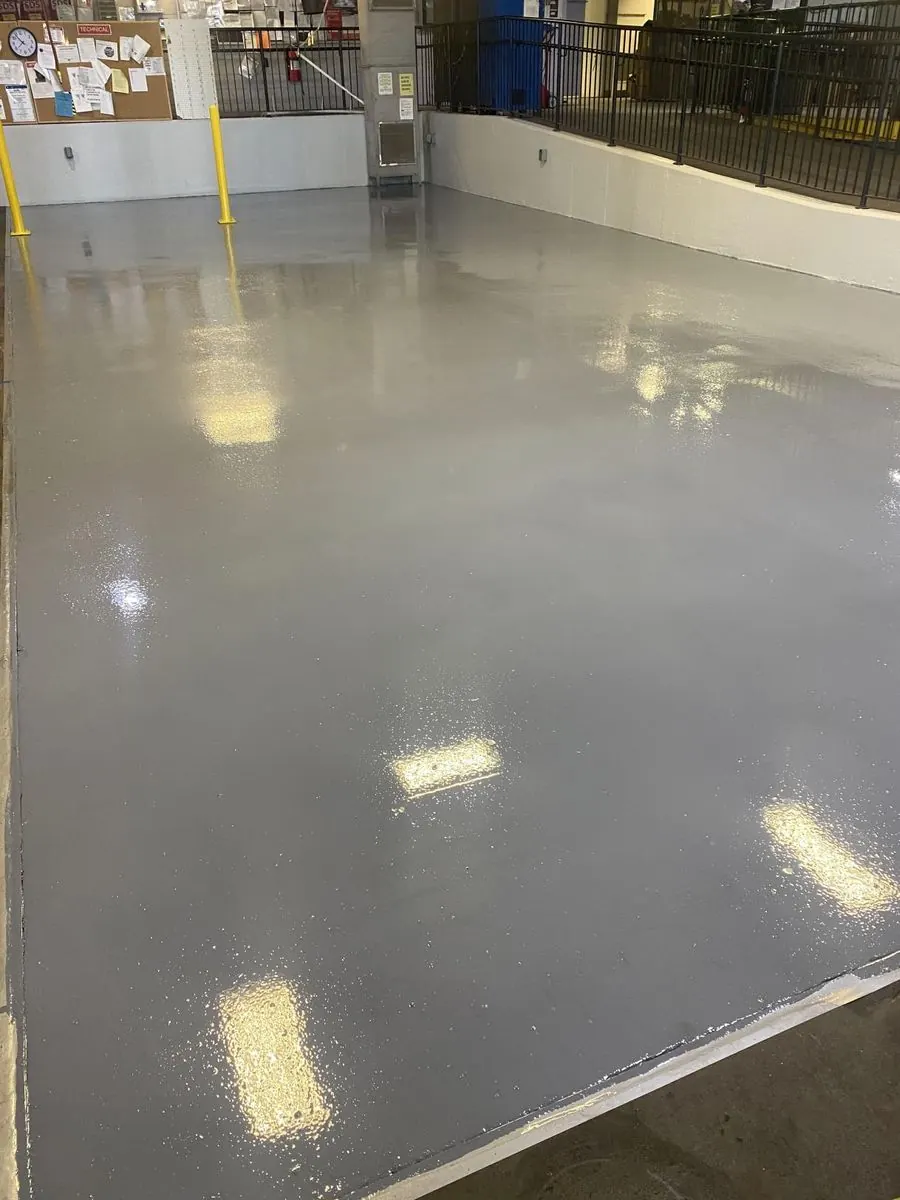
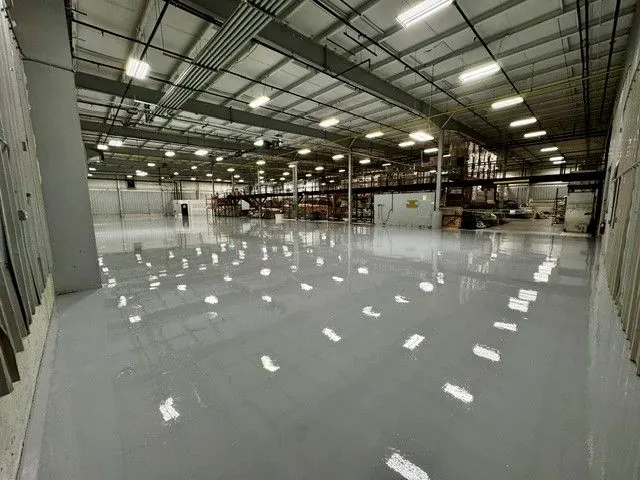
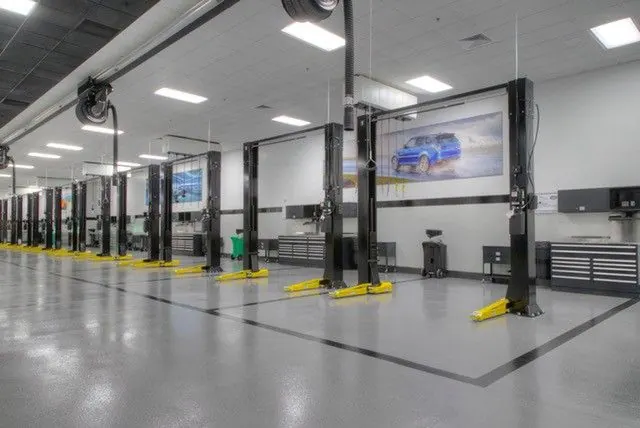
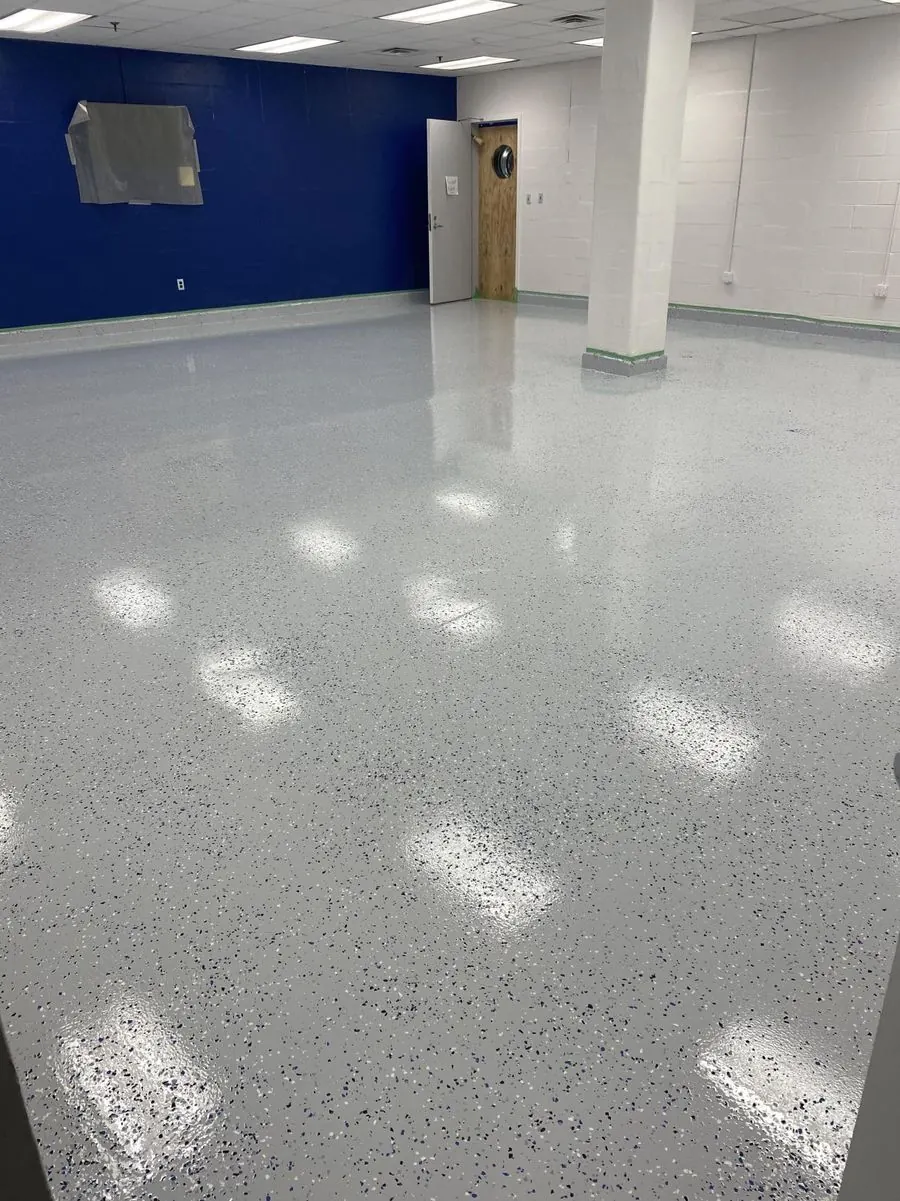
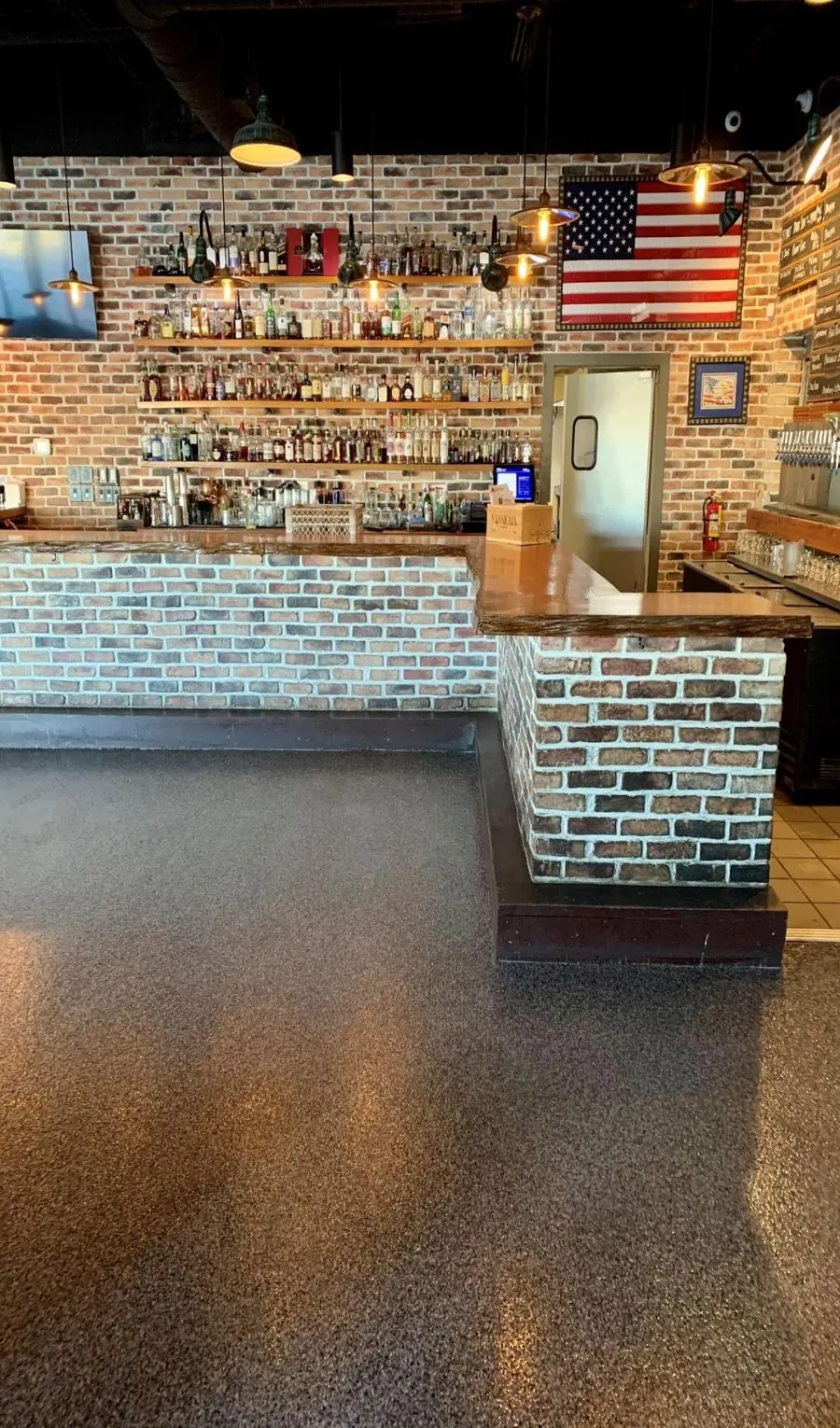
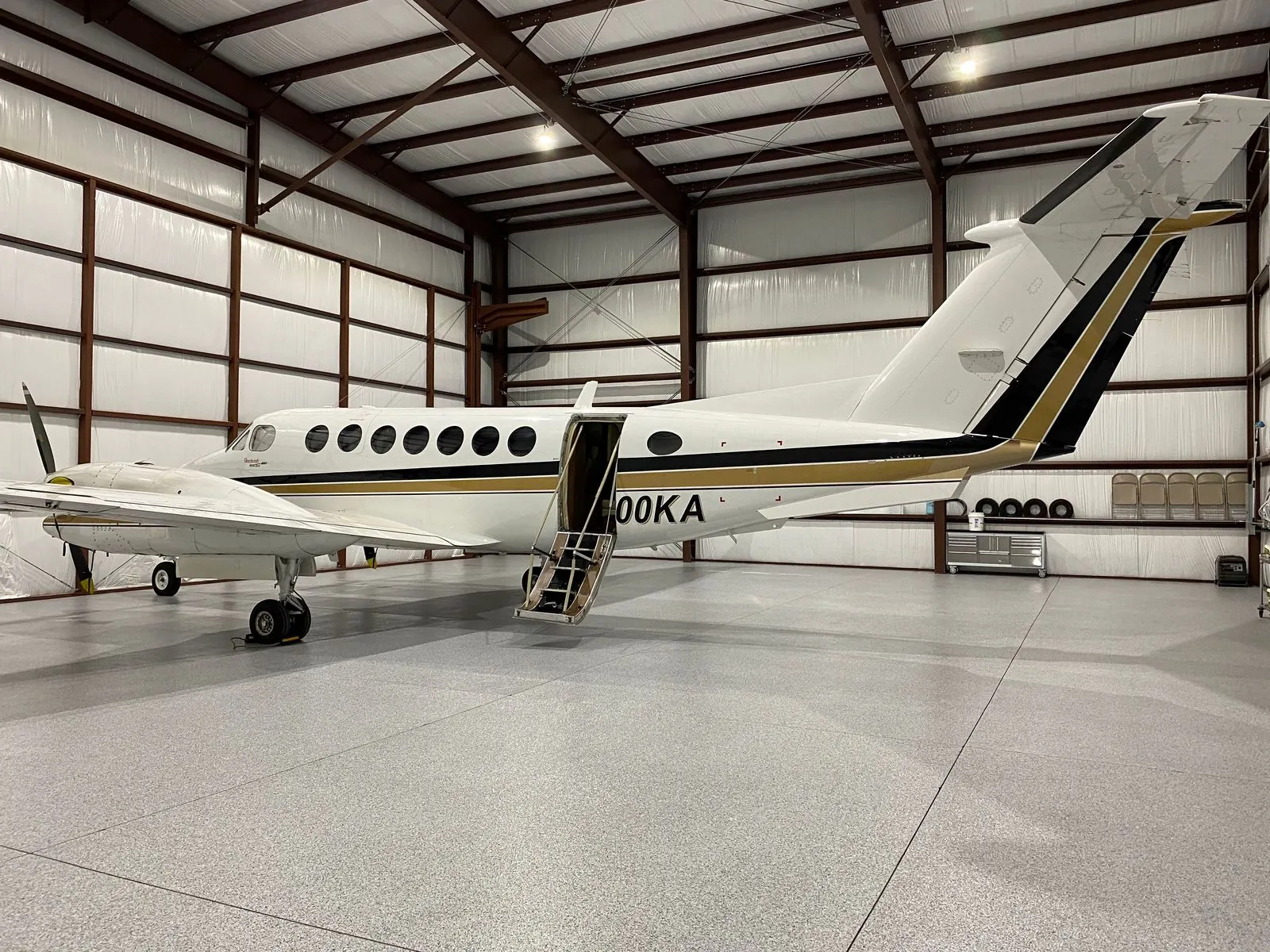
Hangars, bays, kitchens and stairwells
From the Floor Shield project gallery. Select any photo to enlarge it.